

Mithila Museum
Museum Concept
A painting-centered museum initiative rooted in the artistic, historical, and cultural significance of Mithila painting.
The Central Idea
A Simple but
Important Shift
Rather than treating Mithila as a peripheral or secondary tradition, the museum places it at the center of curatorial, educational, and institutional attention.
The initiative is founded on the idea that Mithila painting should be interpreted as a major visual tradition with its own formal language, narrative power, aesthetic intelligence, and evolving contemporary voice.
The museum concept rests on five core pillars — each one shaping how the institution approaches art, community, and the future.
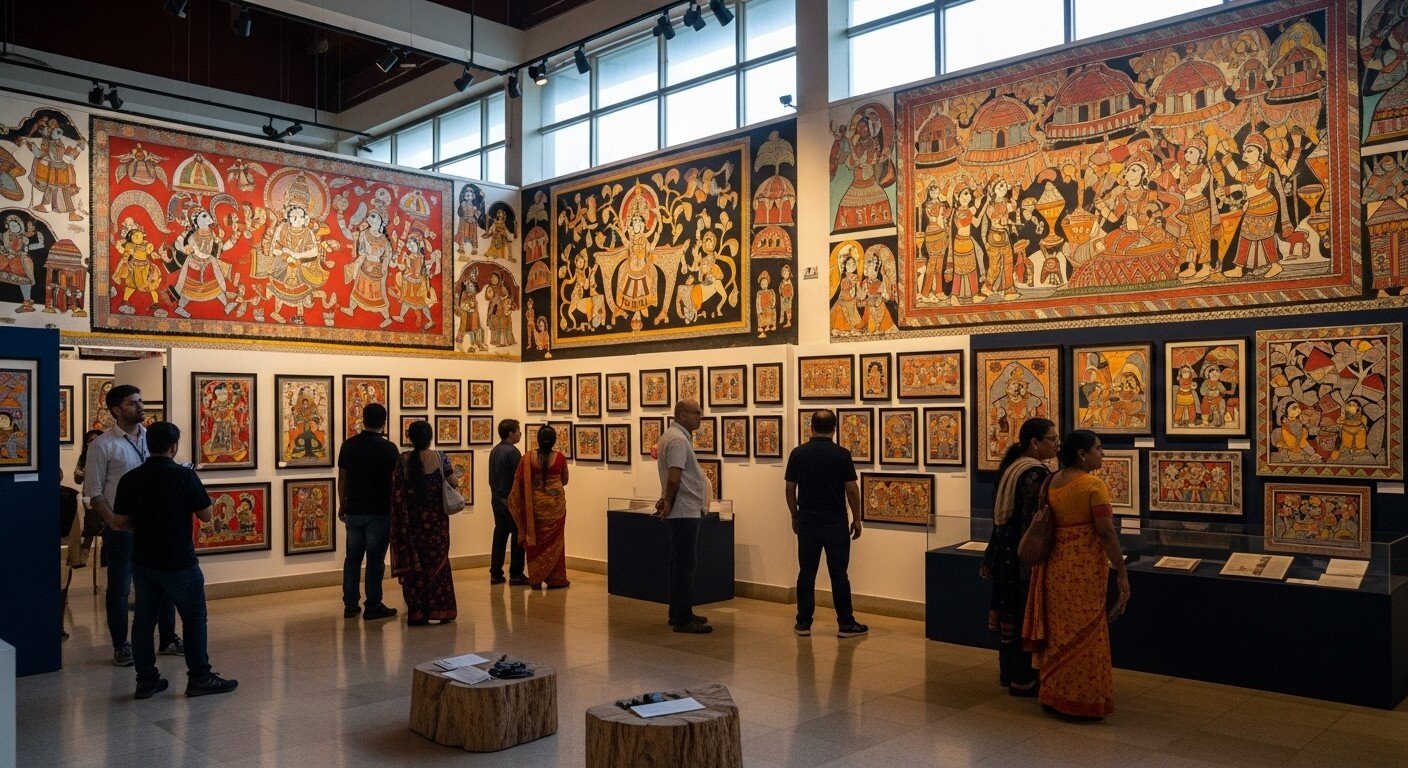
A major visual tradition with its own formal language & aesthetic intelligence.
The Framework
Five Core Pillars
The museum concept rests on five principles that together define how Mithila painting will be preserved, interpreted, and brought into contemporary life.
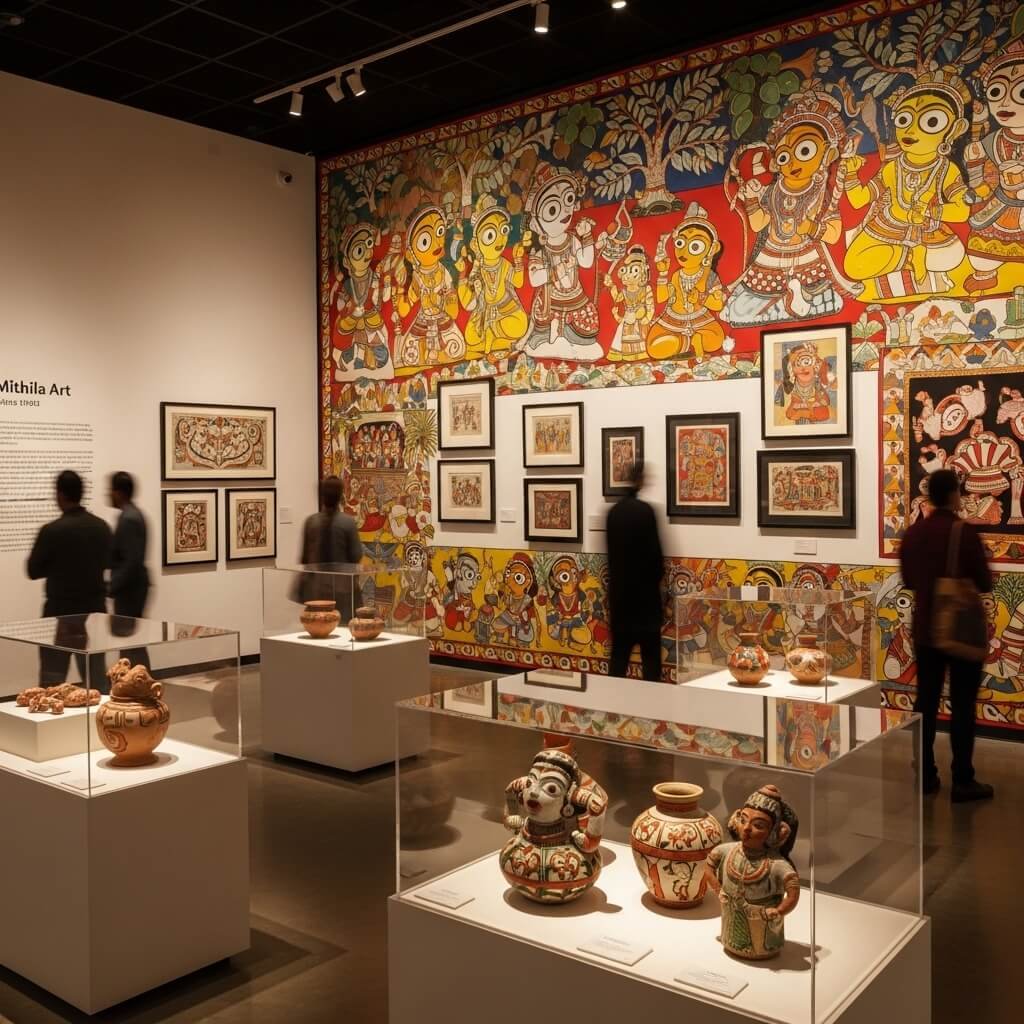
First Pillar
Artistic Focus
This museum is centered on painting, not on generalized craft or broad ethnographic display. The emphasis is on image-making, visual storytelling, symbolism, composition, surface, and artistic lineage.
At the heart of this pillar are the painters themselves — those who have shaped and continue to shape the tradition through their hands, knowledge, and vision.
Second Pillar
Cultural Depth
Mithila painting carries within it a rich relationship to ritual life, domestic space, memory, nature, ancestry, devotion, and community knowledge.
The museum will seek to interpret these dimensions carefully — helping visitors understand not only what the paintings look like, but what they mean, where they come from, and how they have functioned across generations.
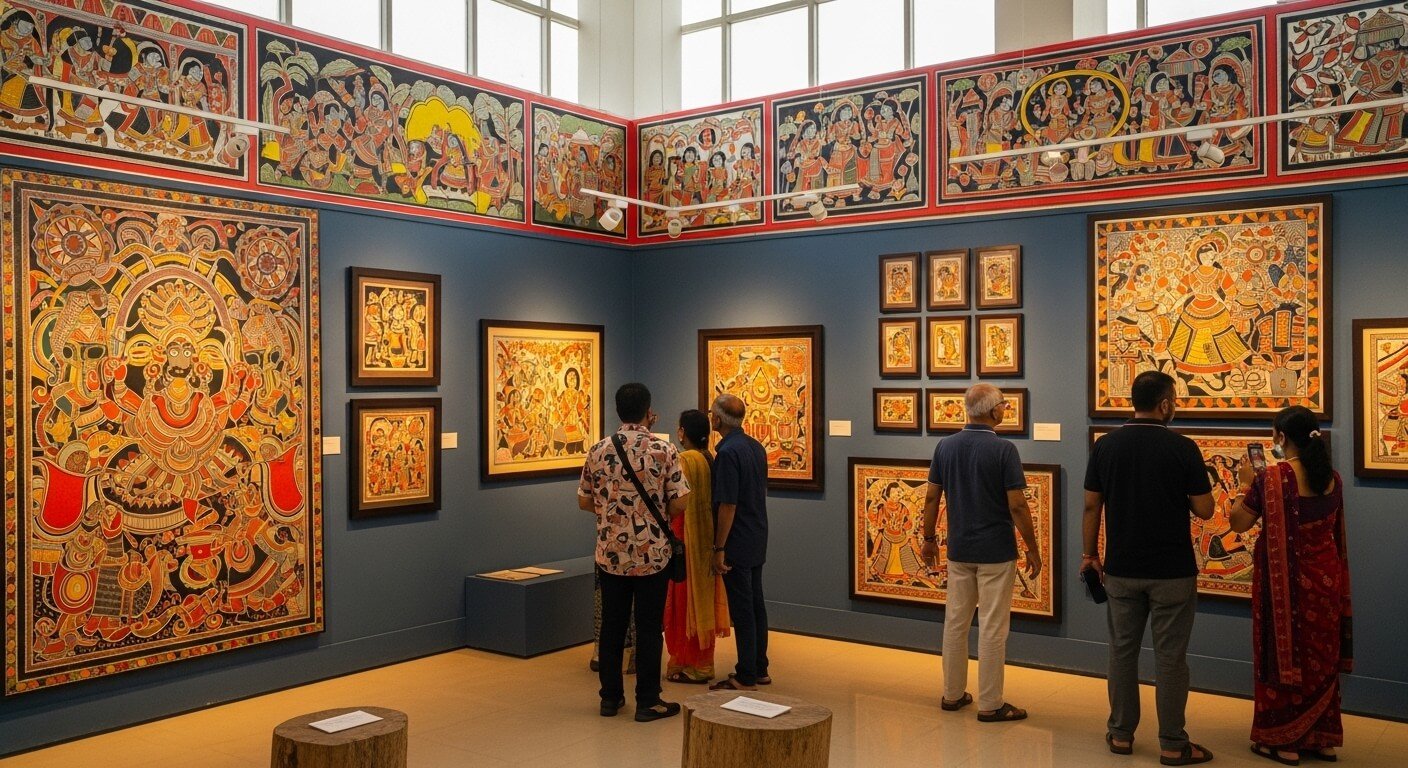
Living Continuity
Mithila painting is not frozen in the past. It has evolved over time, adapted to new materials and audiences, and increasingly entered conversations around identity, ecology, gender, migration, and social change.
The museum concept therefore includes both historical grounding and contemporary expression.
Dialogue & Connection
While Mithila painting remains the central focus, the museum is also envisioned as a place where it can be placed in thoughtful conversation with other painting traditions across Asia and the diaspora.
Traditions such as Korean minhwa, Vietnamese Đông Hồ, Chinese nianhua, and Japanese devotional practices offer meaningful points of comparison — not to blur distinctions, but to deepen understanding.
Future-Building
The museum is being imagined as more than a gallery. It is envisioned as a long-term cultural platform that can support artist engagement, scholarship, youth education, digital interpretation, and public art.
New forms of creative experimentation rooted in inherited visual knowledge — that is the horizon this museum works toward.
Taken Together