

Mithila Museum
What We Aim
to Preserve
Preservation understood in a broad and living sense — not only objects, but knowledge, artistic language, symbolic systems, memory, and cultural continuity.
Our Approach
Preservation in a
Broad & Living Sense
The initiative to build Mithila Museum is grounded in preservation — but preservation here is understood in a broad and living sense.
We are not only concerned with preserving objects. We are equally concerned with preserving knowledge, artistic language, symbolic systems, memory, and cultural continuity. Preservation, for us, is not about freezing time. It is about safeguarding what matters most so it can continue to live, speak, and evolve.
What We Preserve
- The Painting Tradition
- Lineage & Transmission
- Meaning & Symbolism
- Artistic Authorship
- Context & Cultural Environment
- Contemporary Relevance
- Cross-Cultural Dialogue
First
The Painting
Tradition Itself
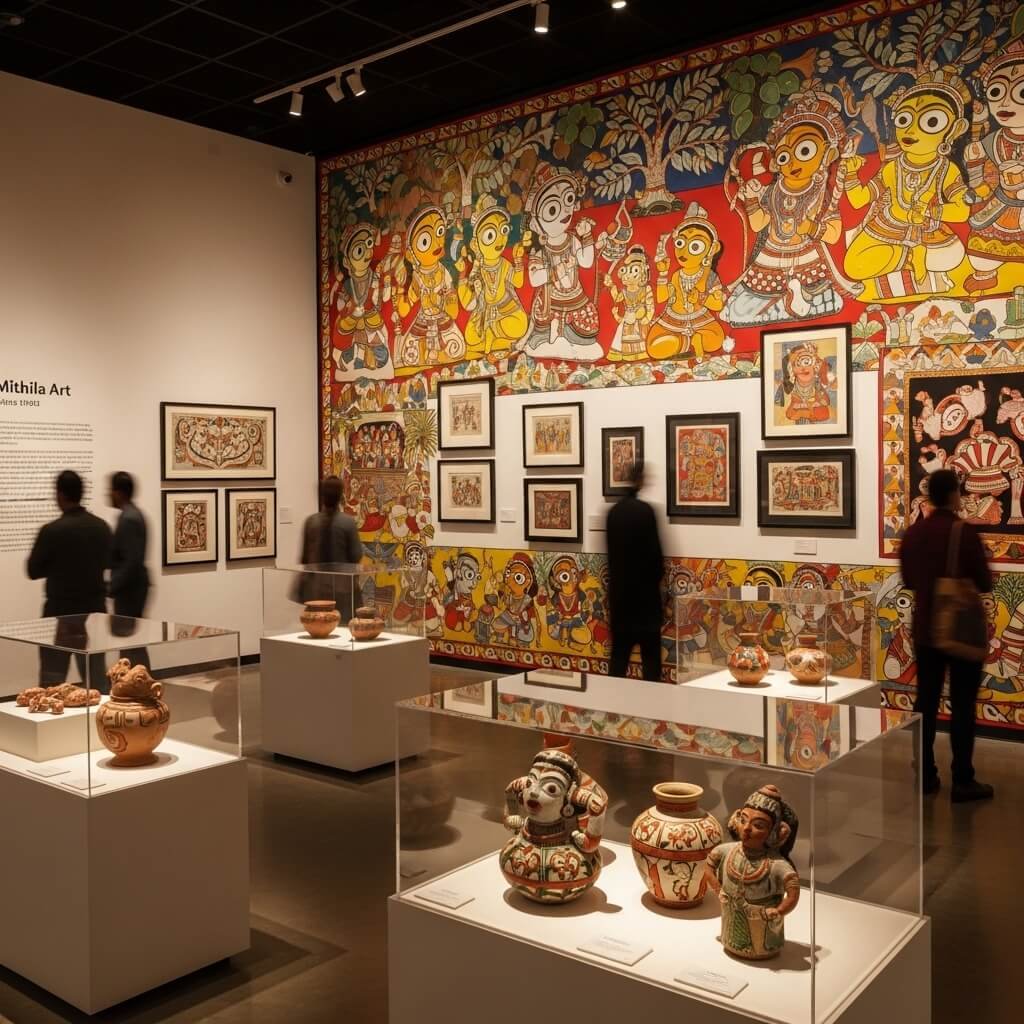
At the most direct level, we aim to preserve the visual tradition of Mithila painting — its distinctive line work, compositional logic, symbolic vocabulary, narrative structures, themes, color sensibilities, and regional styles.
This includes preserving the aesthetic integrity of the paintings themselves and the broader visual knowledge embedded in the tradition.
Second
Lineage &
Transmission
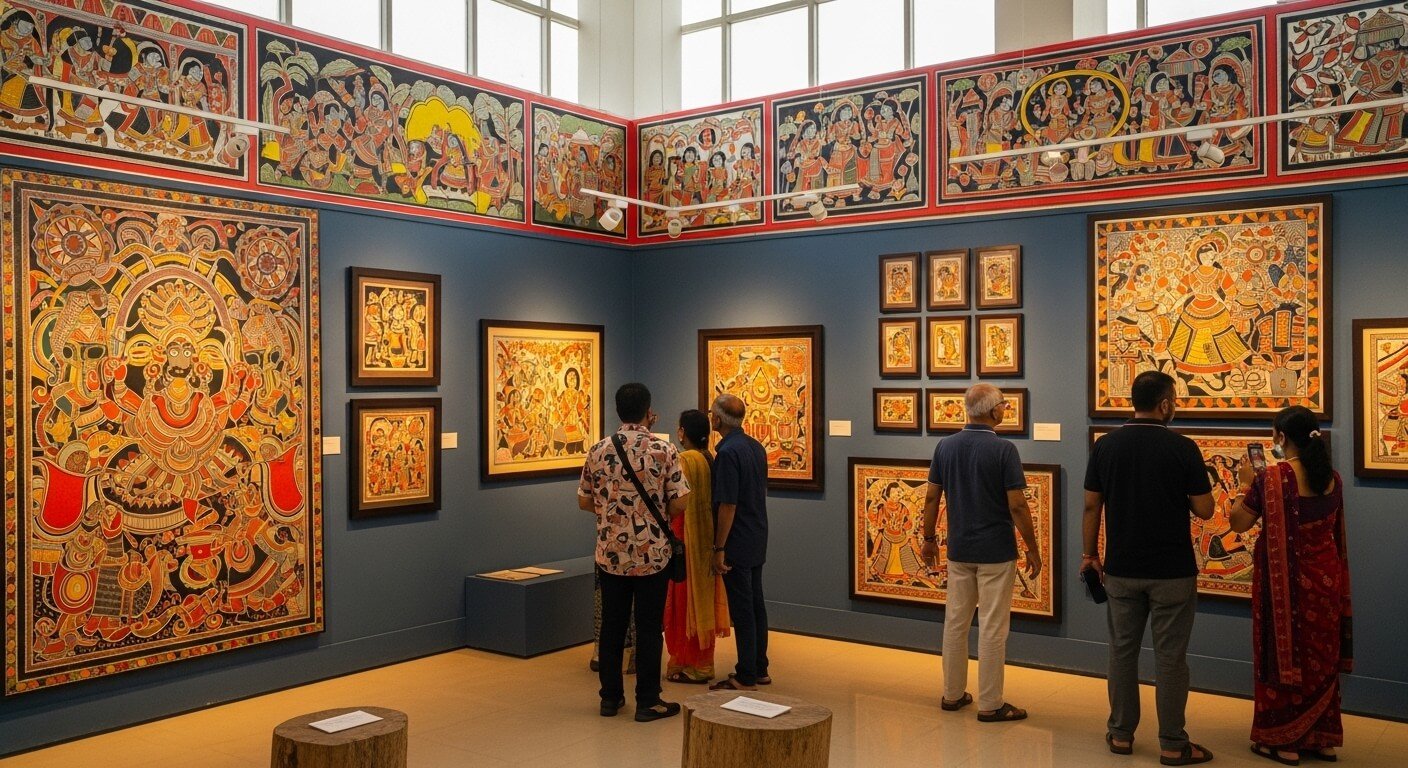
Mithila painting has been sustained through intergenerational transmission, often through women's knowledge passed across family and community life.
One of the most important things this initiative aims to preserve is that lineage: not merely the finished works, but the stories of how artistic knowledge is learned, held, adapted, and shared over time.
Continuing the Work
Further Commitments
Meaning & Symbolism
Mithila painting is rich with symbolic life. Its imagery speaks to fertility, protection, celebration, devotion, cosmic order, social memory, seasonal cycles, human relationships, and the natural world.
We aim to preserve this symbolic intelligence so that future generations can encounter the tradition not only visually, but intellectually and culturally.
Artistic Authorship
Too often, traditions like Mithila are spoken about in abstract terms while the artists themselves remain insufficiently centered.
We aim to preserve the stories, contributions, and artistic authorship of the painters who have shaped the tradition across generations — building awareness around individual voices, practices, and innovations.
Context & Cultural Environment
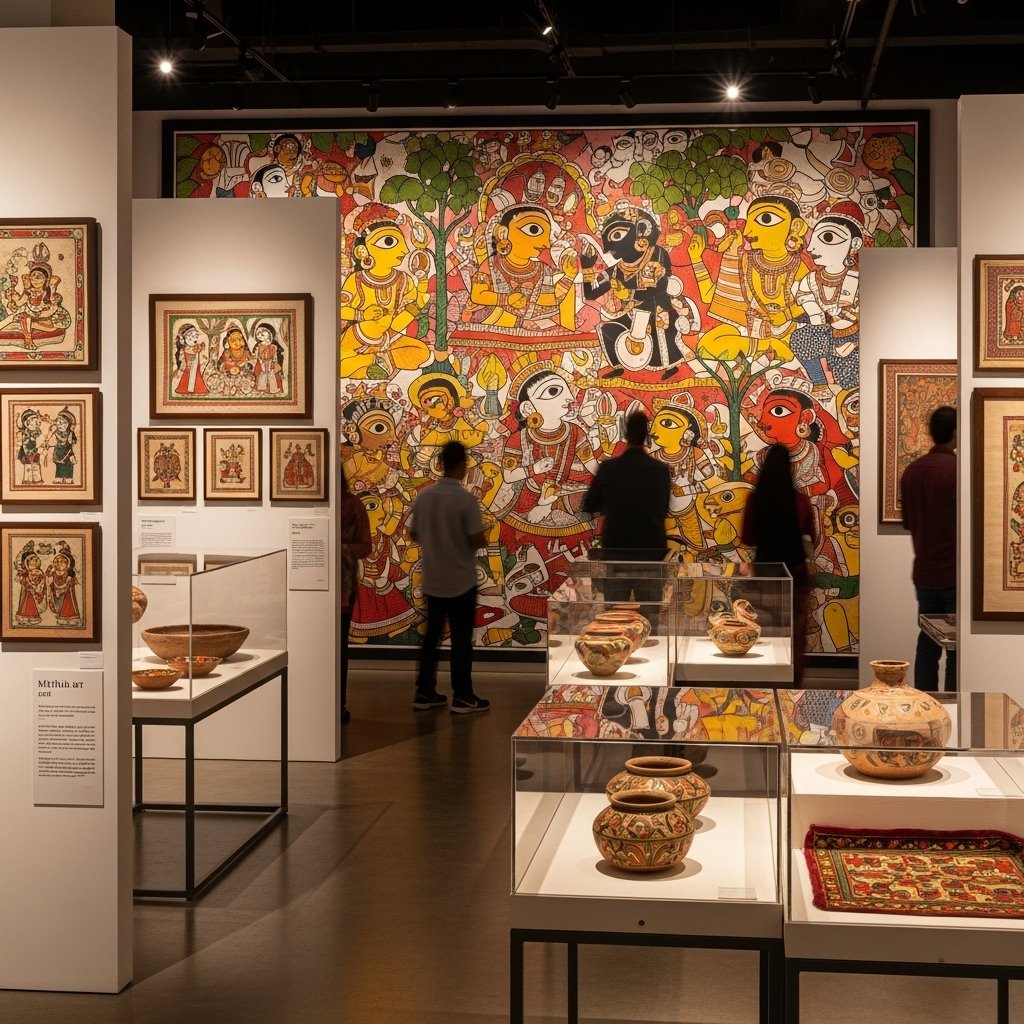
Mithila painting did not emerge in isolation. It belongs to larger worlds of domestic space, ritual life, social custom, ecology, oral storytelling, and regional identity.
Preserving the tradition means preserving the context that gives it meaning.
Sixth
Contemporary Relevance
We also aim to preserve Mithila painting's right to remain alive in the present. Preservation should not turn a living tradition into a static artifact.
It should create the conditions for continuity, reinterpretation, and future practice — supporting contemporary painters, new audiences, new scholarship, and evolving forms of presentation.
Seventh
Cross-Cultural Dialogue
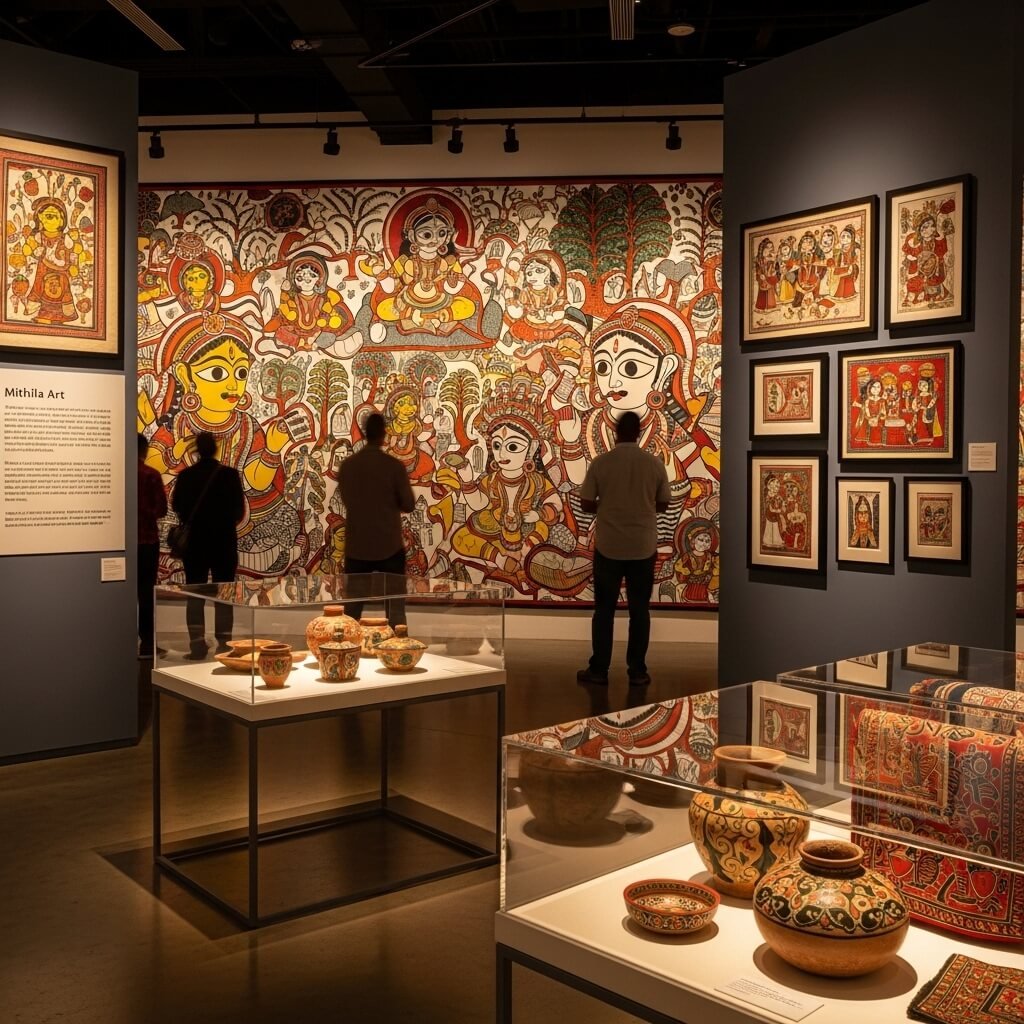
As the museum grows, we also hope to preserve a broader understanding of how painting traditions across AAPI communities have served similar roles in carrying memory, symbolism, and communal identity.
By opening a careful dialogue with related traditions, the museum can help preserve not only Mithila's uniqueness, but also its place in a wider landscape of living visual cultures.
Preservation is not about freezing time. It is about safeguarding what matters most so it can continue to live, speak, and evolve.
Mithila Museum — A Living Institution