

Mithila Museum
Mithila
Culture
A living system of memory — where ritual, family life, devotion, seasonal practice, and visual symbolism have been closely intertwined for centuries.
Origins & Context
A Historical & Cultural
Region of Depth
Mithila culture comes from a historical and cultural region spanning parts of present-day Bihar in India and the Janakpur area of Nepal.
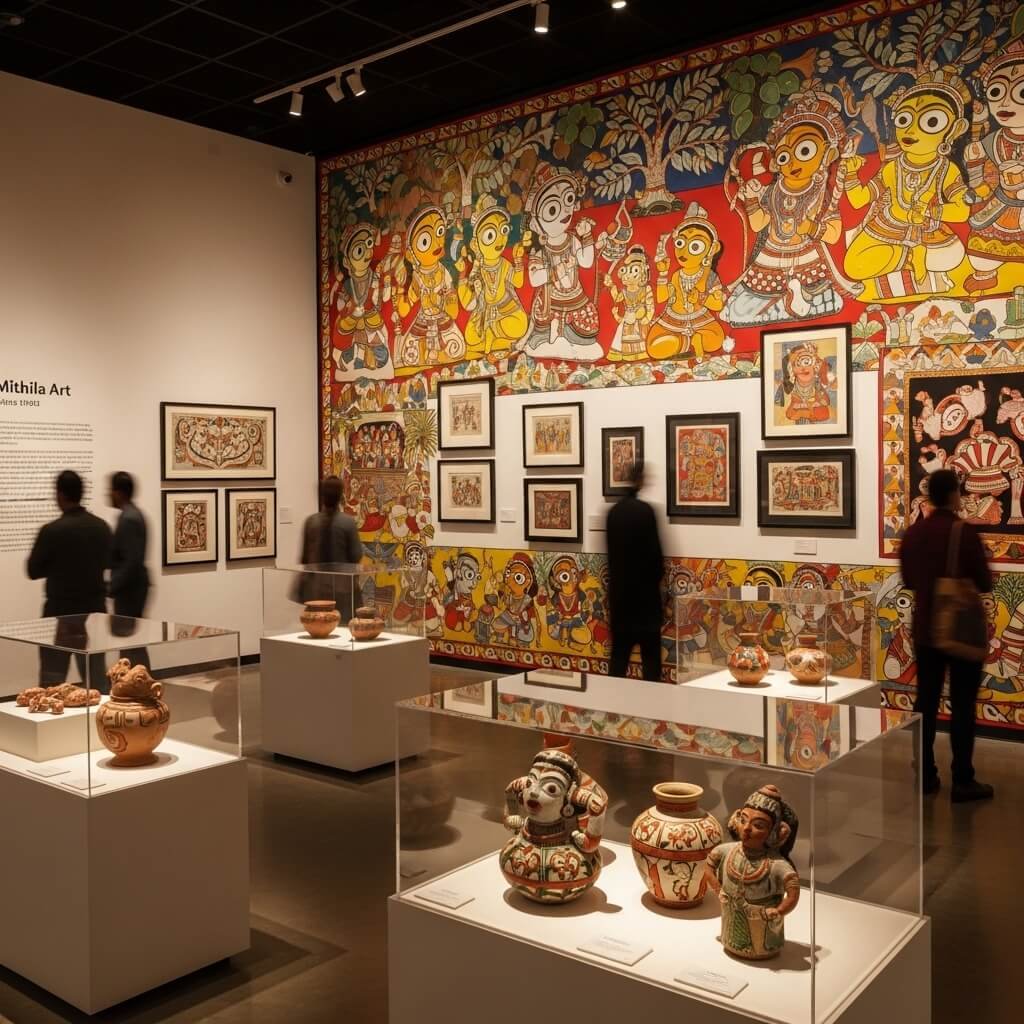
Mithila painting emerged within this wider cultural world, where ritual, family life, devotion, seasonal practice, and visual symbolism were closely intertwined. Scholars describe Mithila painting as a tradition long practiced by women on the mud walls of homes, especially for significant occasions such as marriage, with motifs intended to invite blessing, well-being, fertility, and protection.
What Makes It Distinctive
A Living System
of Memory
Mithila painting cannot be understood only as image-making. It is part of a larger cultural language through which people have expressed values, hopes, relationships with nature, and ideas of the sacred.
Oral Storytelling
Painting has always existed alongside oral narratives — the visual and the spoken reinforcing one another across generations.
Household Ritual
Paintings adorned the walls of homes during weddings and festivals — ritual acts that connected the sacred to the everyday.
Social Customs
The tradition was embedded in the social fabric — practices of learning, sharing, and gifting through painted forms and symbols.
Sacred Imagery
Deities, cosmological diagrams, and sacred motifs gave the tradition a spiritual dimension woven into daily life and ceremony.
Intergenerational Learning
Knowledge of motifs, symbols, and technique was passed from mother to daughter — an unbroken chain of artistic transmission.
A Tradition Alive in the Present
Never Frozen
in the Past
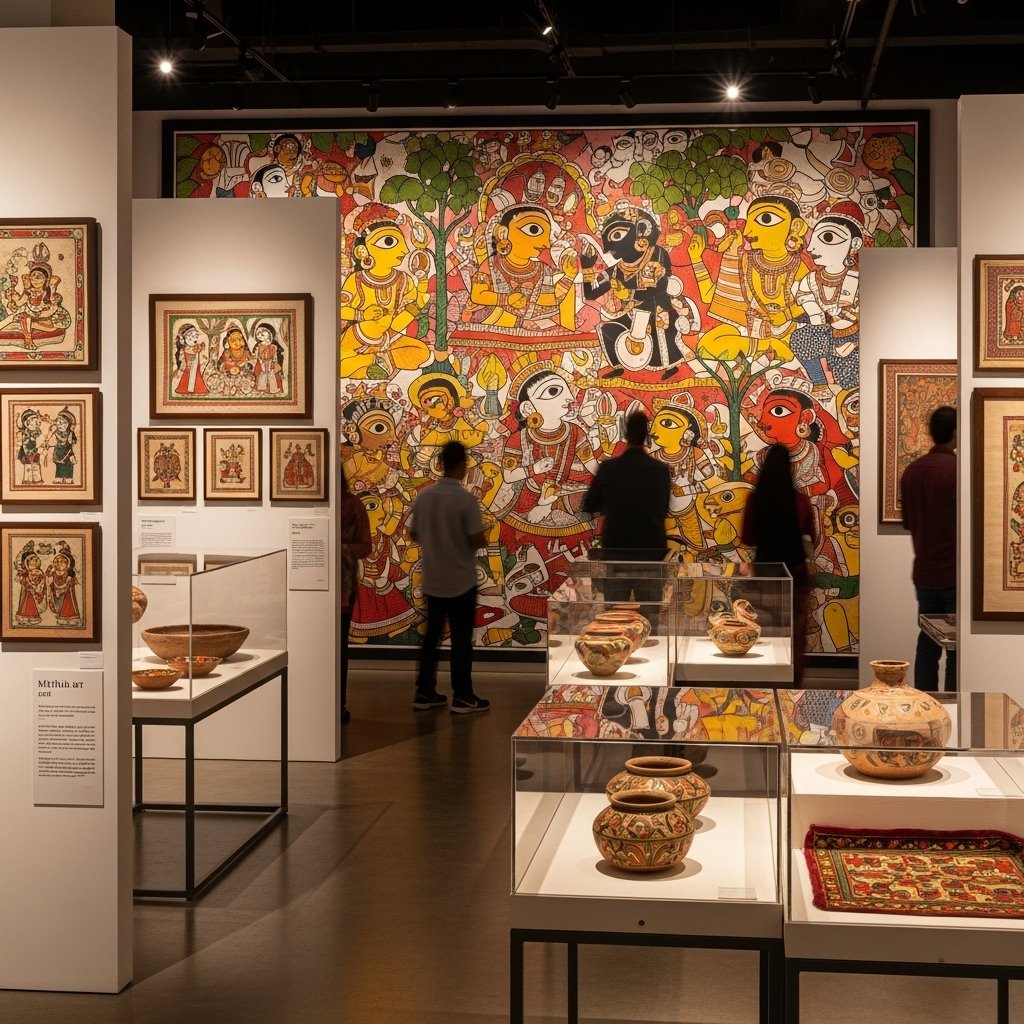
Mithila culture has never been frozen in the past. Major museum interpretation today increasingly presents Mithila painting as a tradition that moved from private and domestic space into the public sphere, where it became a vibrant artistic movement with social and economic significance for artists — especially women.
That shift is central to the vision of Mithila Museum: to honor the cultural depth of Mithila while presenting it as fully alive in the present.
The Museum’s Role
Encountering the World
Behind the Paintings
For the museum initiative, “Mithila Culture” represents the broader world from which the paintings arise. The museum’s role will be to help audiences encounter that world with clarity and respect, so that Mithila painting is understood not as isolated imagery, but as part of a richly layered cultural inheritance.
The Cultural World
Symbols
A rich vocabulary of motifs carrying layers of sacred and social meaning.
Ceremonies
Marriage, festivals, and seasonal rituals that brought painting to life.
Artistic Lineage
Family and regional traditions passed through generations of artists.
Women’s Knowledge
The tradition sustained through the creative authority of women.
Ecology
Nature, animals, and the natural world deeply embedded in the imagery.
Devotion
Sacred imagery and spiritual practice woven into daily creative life.
Visual Memory
A living archive of community history held through image and form.
Mithila painting is not isolated imagery. It is part of a richly layered cultural inheritance — a world of symbols, ceremonies, artistic lineage, women’s knowledge, ecology, devotion, and visual memory.
Mithila Museum — Mithila Culture