

Mithila Museum
AAPI
Art Forms
Many AAPI communities hold painting and image traditions that share comparable functions — symbolism, domestic meaning, ritual use, visual storytelling, and intergenerational transmission.
The Wider Context
Rooted in Mithila,
Connected to a Wider World
Mithila Museum is rooted in Mithila painting, but the initiative also recognizes that many AAPI communities hold painting and image traditions that share comparable functions.
These comparisons open a future-facing path for the museum — not about collapsing traditions into one category, but about showing how different communities across Asia and the diaspora have used painting and image traditions to carry memory, blessing, identity, hope, and continuity.
Shared Functions
Four Traditions in Dialogue
Painting Traditions
Across Asia
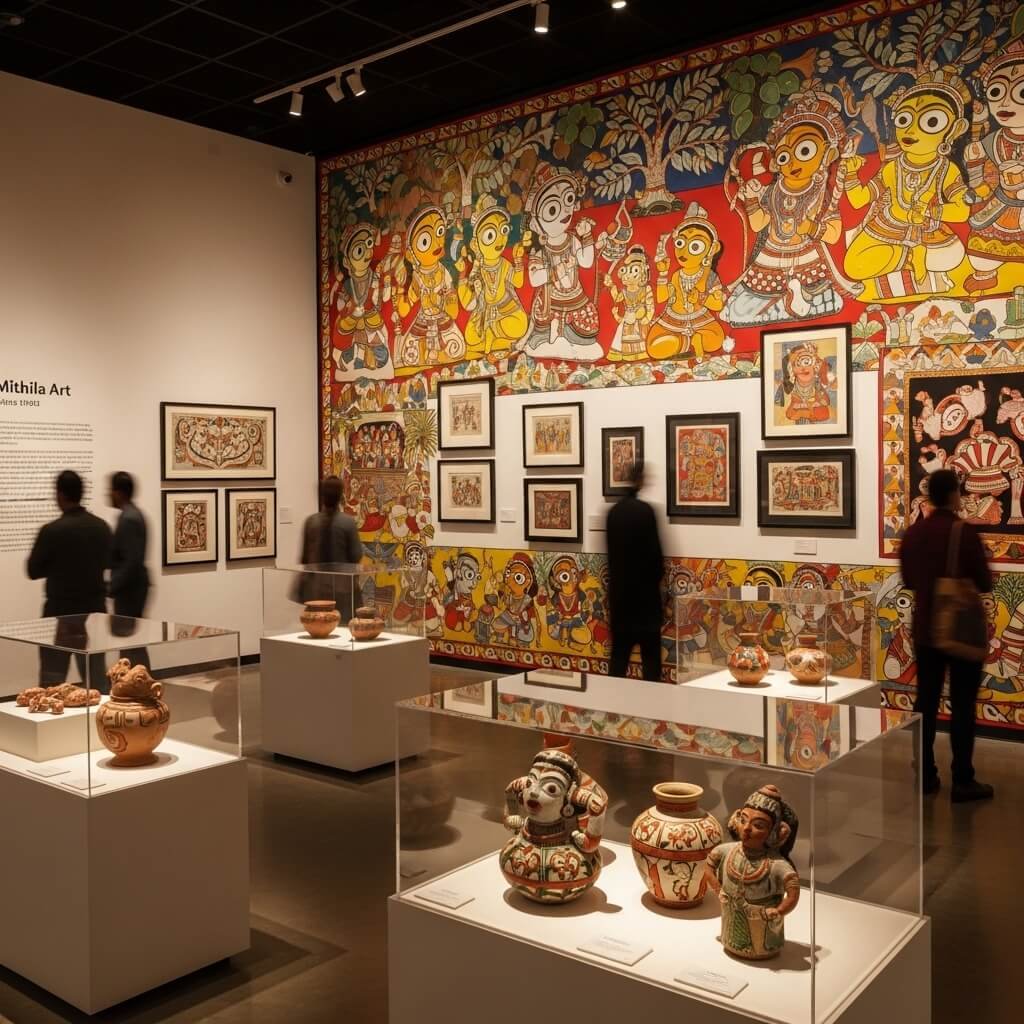
Minhwa
A painting tradition associated historically with commoner patronage and widely recognized for symbolic imagery tied to happiness, fortune, longevity, protection, and household life.
Sources on minhwa emphasize its bright color, popular imagination, and motifs of aspiration — making it a meaningful point of comparison to Mithila's own symbolic and community-rooted visual language.
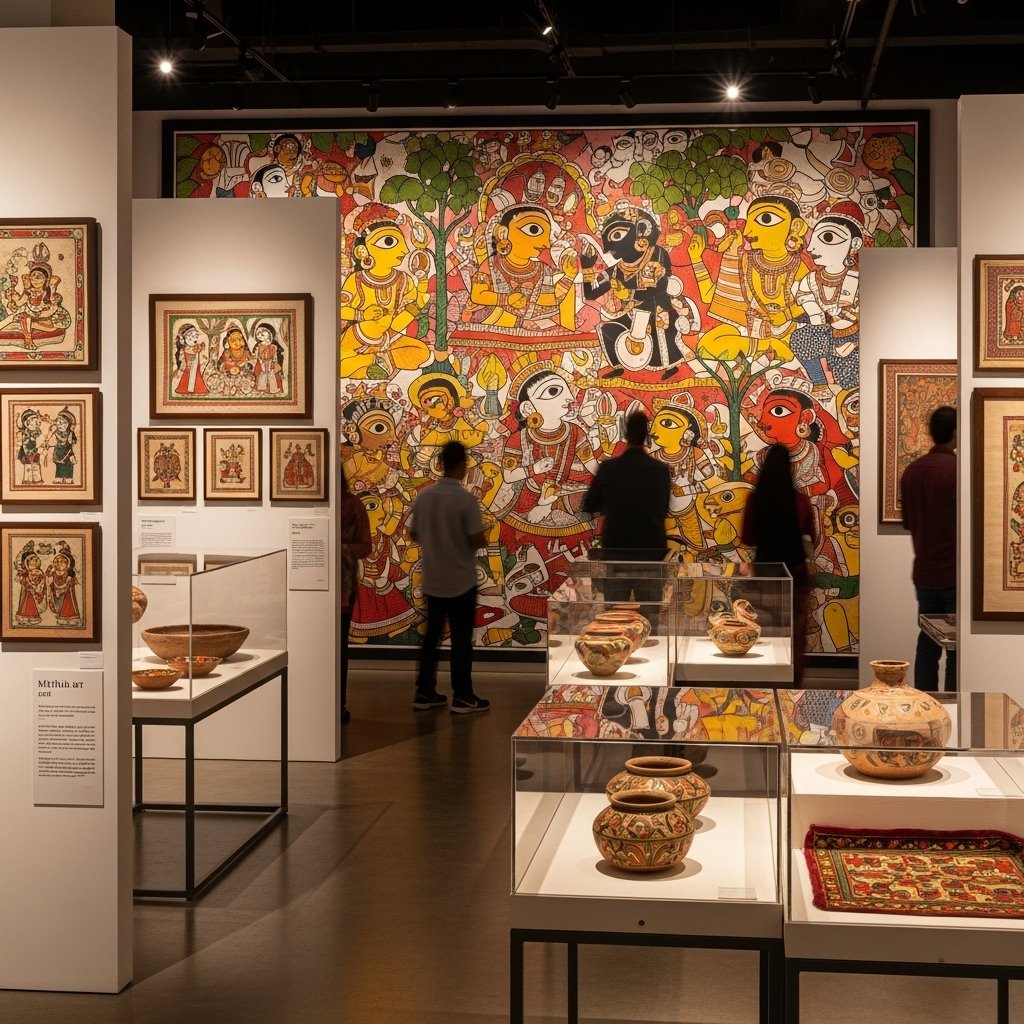
Đông Hồ
Known for bold compositions, popular storytelling, spiritual imagery, and scenes drawn from everyday and communal life. Though technically different in its woodblock basis, it shares with Mithila an accessible visual language.
Its close relationship to community meaning rather than purely elite display creates a strong parallel with the Mithila tradition.
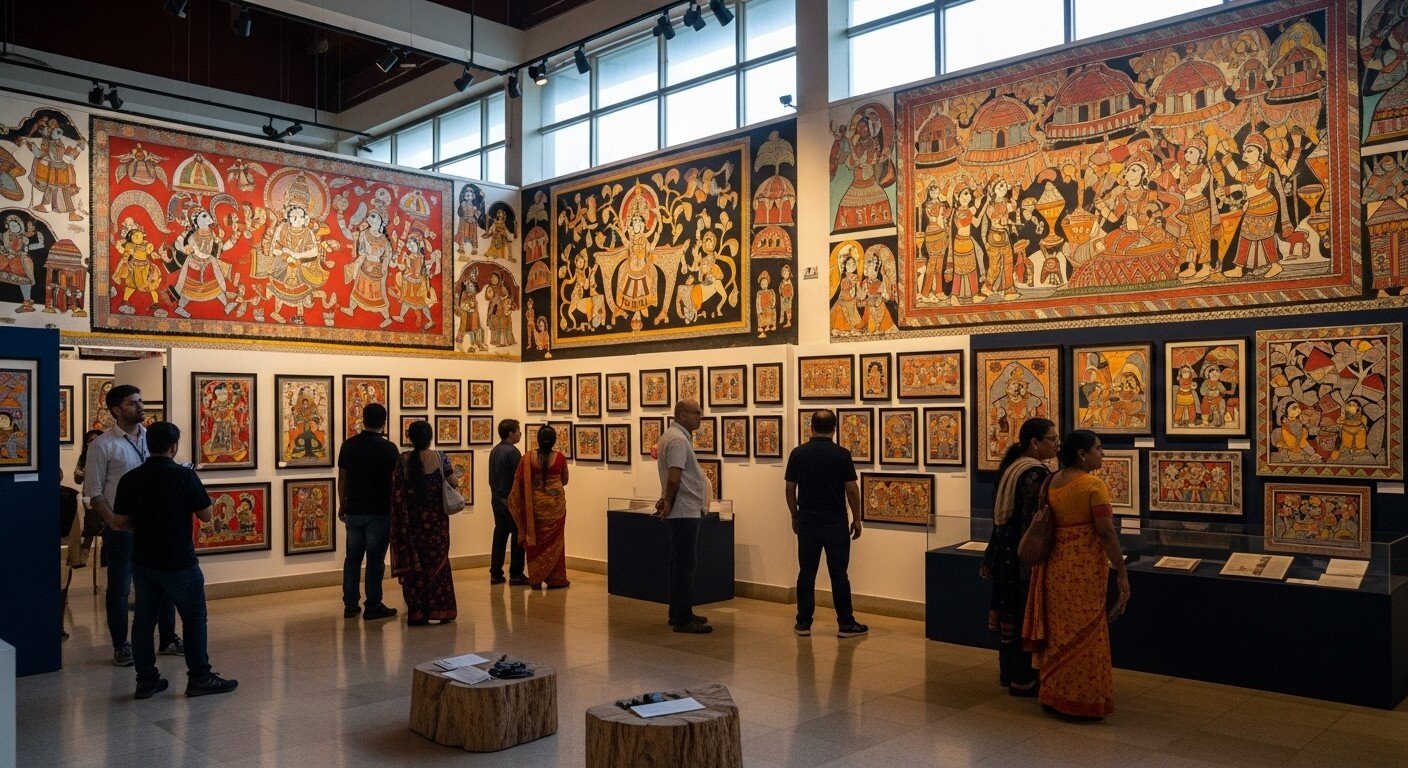
Nianhua
Chinese New Year pictures — popular prints on auspicious or protective subjects, especially images intended to ward off evil and bring good fortune to the family in the coming year.
That relationship between image, blessing, and domestic display creates a meaningful conceptual bridge with Mithila painting.
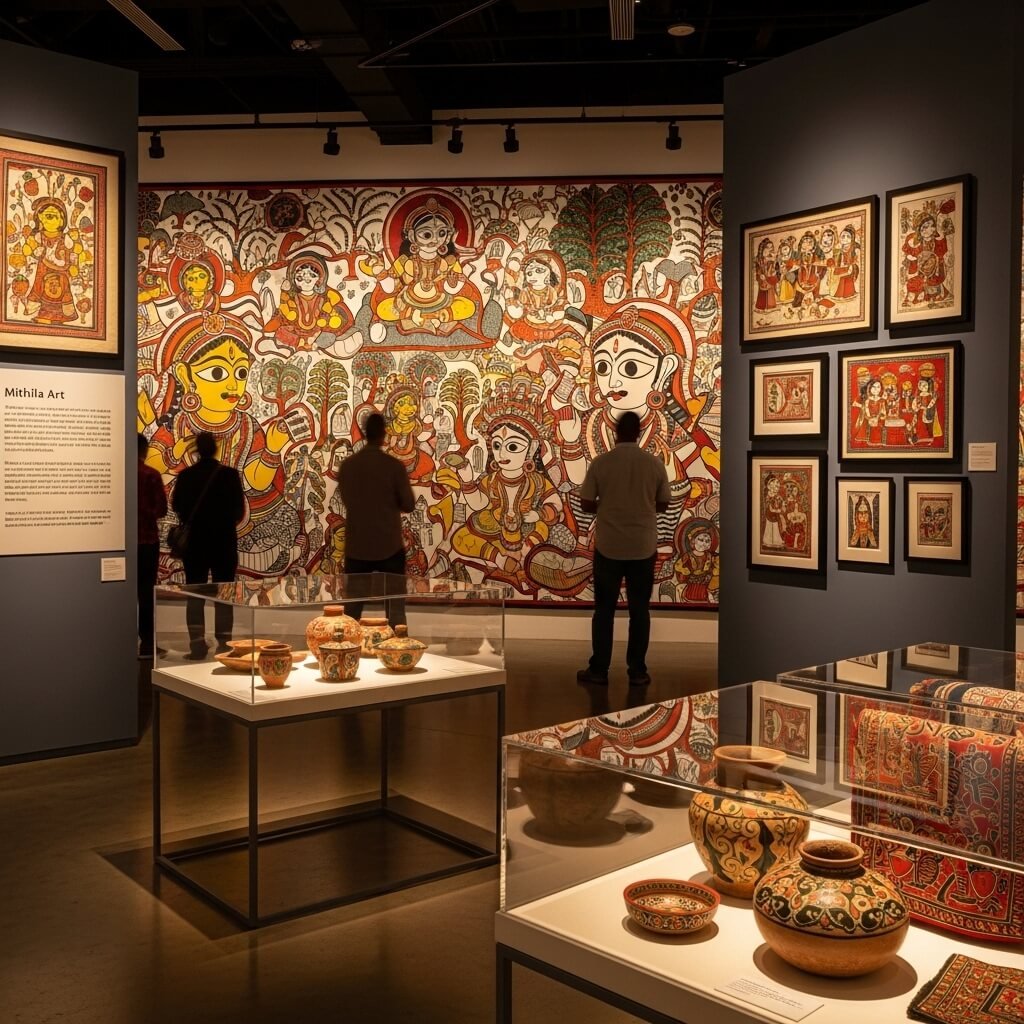
Ema
Wooden plaques on which wishes and prayers are written and offered at shrines. Though not paintings in exactly the same sense, ema demonstrate a key AAPI pattern: image used in relation to prayer, offering, and everyday spiritual life.
For a museum initiative, ema help illuminate how visual forms in Asian cultures often exist close to ritual and lived devotion rather than only in fine-art settings.
What Unites Them
A Shared Thread Across
Asian Image Traditions
These comparisons matter because they show how different communities across Asia and the diaspora have used painting and image traditions to carry the same fundamental human needs.
The Museum’s Future Horizon
Not a Side Topic —
A Future Path
The initiative can remain firmly centered on Mithila while also creating a space for selective, thoughtful dialogue with related AAPI art forms. That dialogue would not be about collapsing traditions into one category.
It would be about showing how different communities across Asia and the diaspora have used painting and image traditions to carry memory, blessing, identity, hope, and continuity.
Over time, this could support exhibitions, workshops, research partnerships, youth programs, and an innovation platform in which Mithila painting leads wider conversations about living visual traditions in contemporary life.
Future Support Areas