

Mithila Museum
Timeline
The history of Mithila painting as a story of continuity, transition, and renewal — from ancient walls to global stages, and toward a future still being written.
A Story in Four Chapters
Continuity, Transition
& Renewal
The museum initiative frames the history of Mithila painting not as a static heritage, but as a living story — one marked by deep roots, historic transformation, widening recognition, and an open future that this initiative hopes to help build.
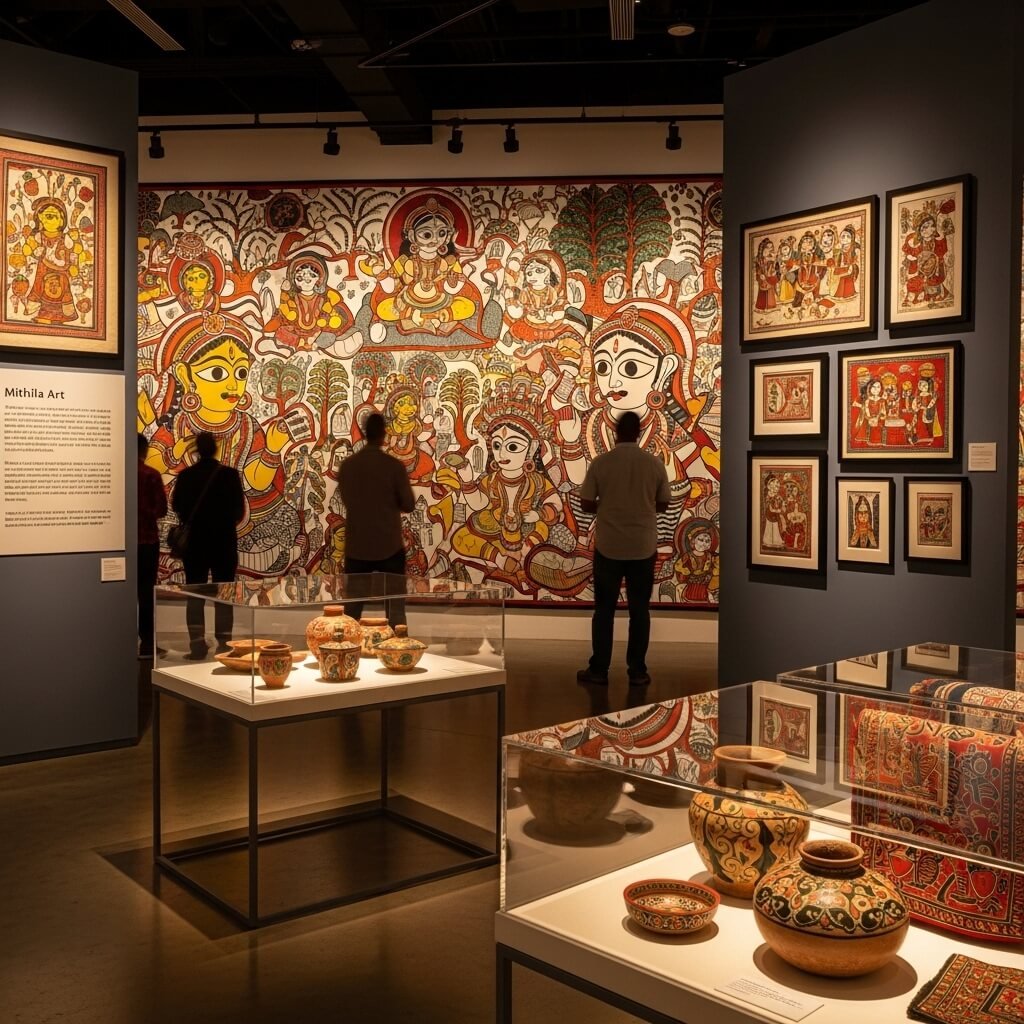
Ancient Tradition
For generations, Mithila painting was practiced on the walls of homes and in domestic ritual settings. It was passed from mother to daughter and was especially associated with auspicious events such as marriage, where paintings invoked blessing, fertility, love, and well-being.
These works were often ephemeral — created for lived use rather than permanent preservation. Their meaning lay not in their survival, but in their performance of life itself.
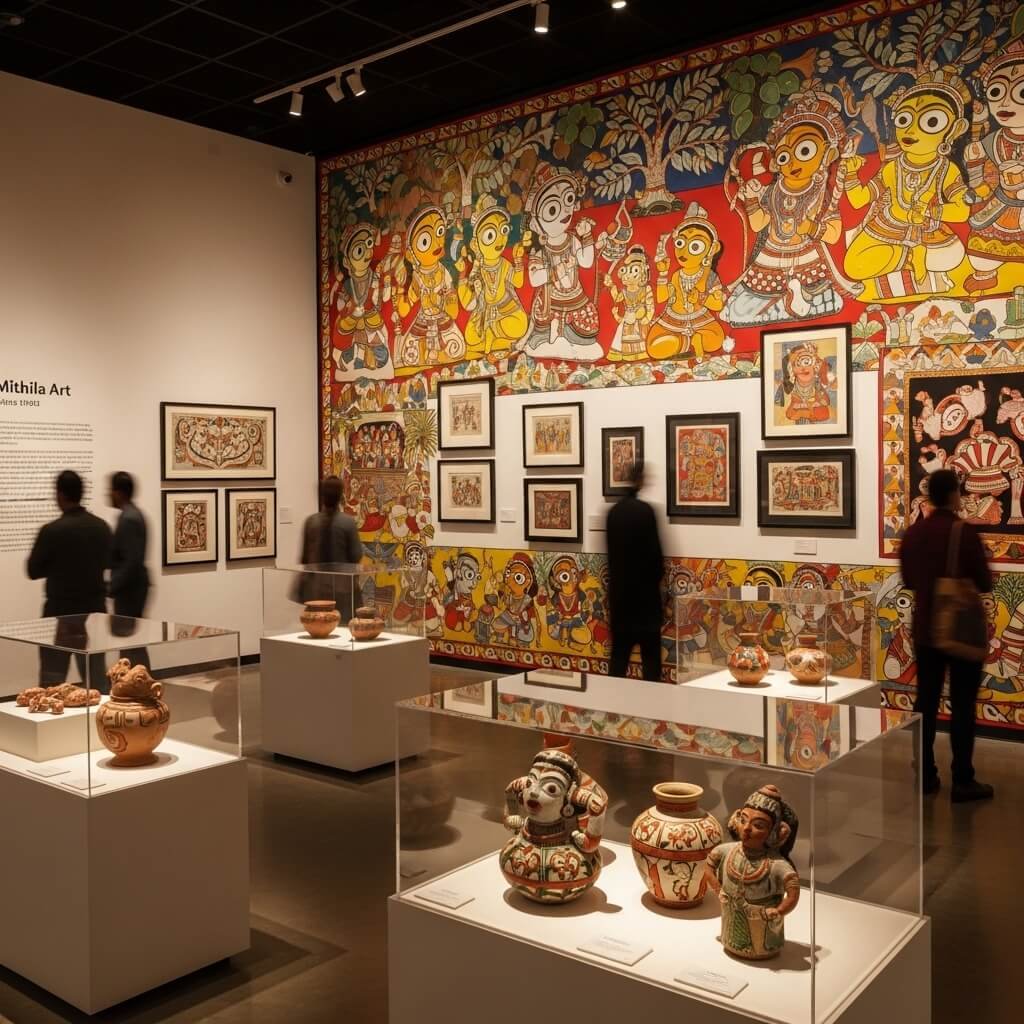
A Major Historical
Turning Point
A major historical turning point came in the 20th century, when Mithila painting increasingly shifted from wall surfaces to paper and other portable formats. This transition made the paintings visible beyond the home and opened a new chapter in which artists could reach wider audiences, enter markets and collections, and begin to shape a contemporary artistic movement.
The movement of a once-private domestic painting tradition into a vibrant public arts movement with major social impact.
Asian Art Museum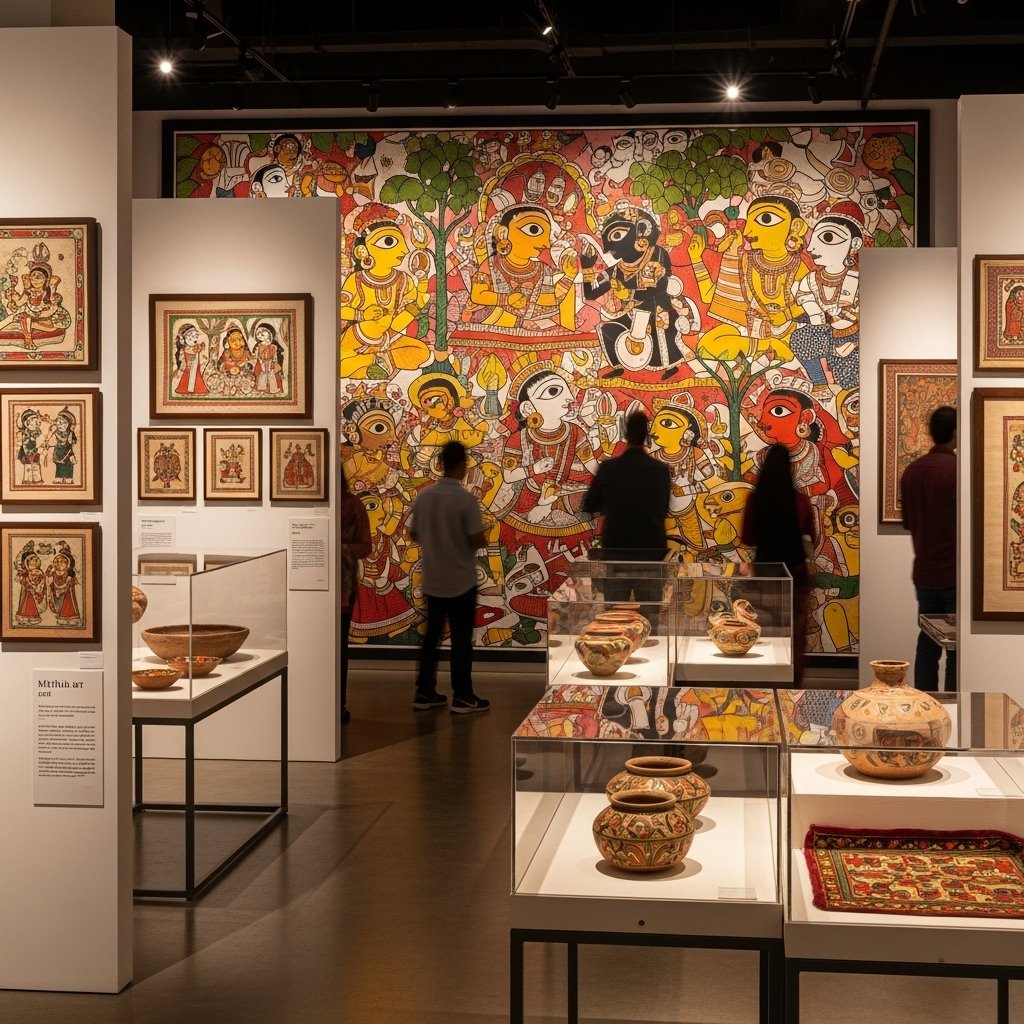
1960s Onward:
Broader Recognition
From the 1960s onward, Mithila painting gained broader recognition in India and internationally. The field expanded in subject matter as artists continued to paint deities, ceremonies, and nature, while also responding to daily life, social change, and contemporary events.
Recent museum interpretation emphasizes that Mithila artists have used inherited styles to express highly personal viewpoints as well as commentary on wider public life.
A New Phase —
and an Open Future
Today, Mithila painting stands in a new phase: one shaped by artists, museums, archives, scholarship, global exhibitions, and diaspora interest. The next chapter is the one this initiative hopes to help build.
Mithila Museum is envisioned as part of that future timeline — a place where the tradition's past is preserved, its present is interpreted, and its future is actively supported.
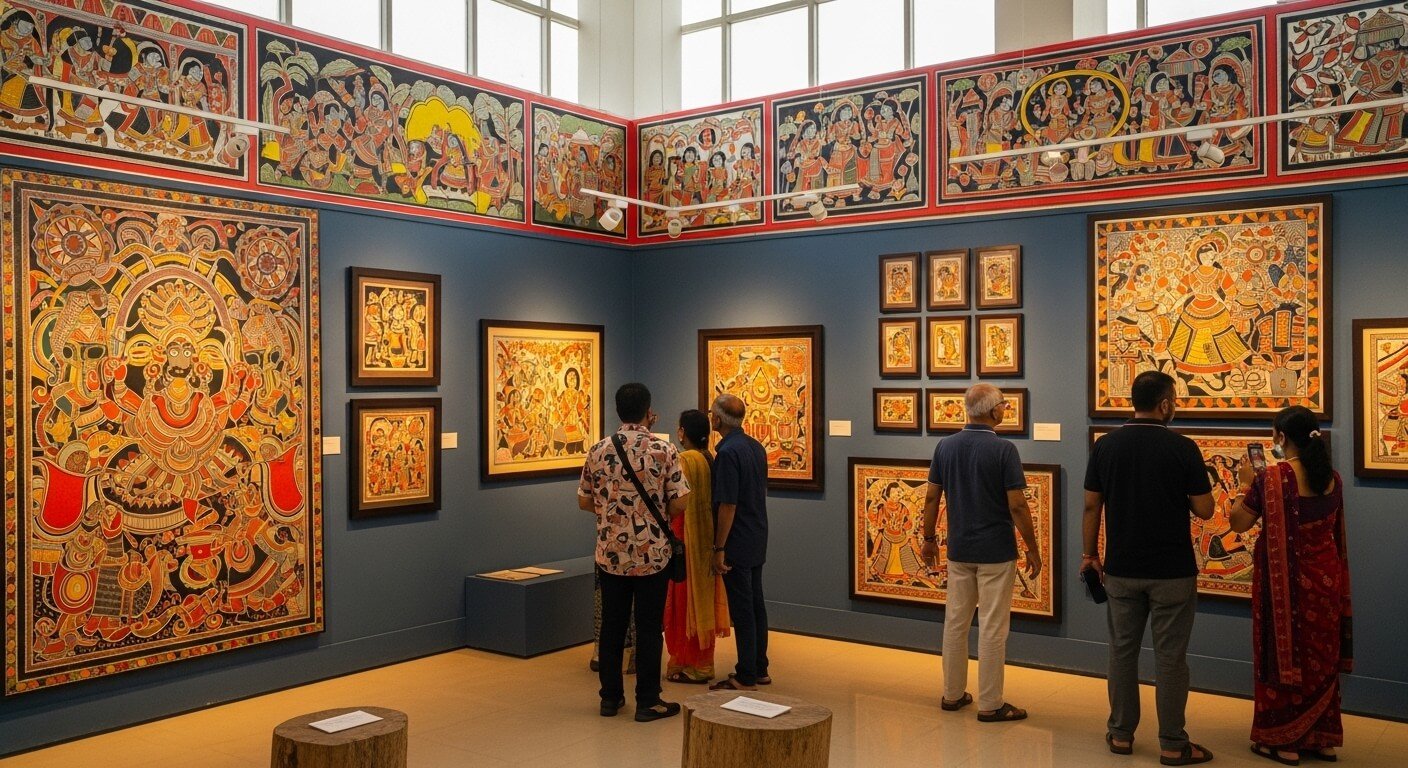
Mithila Museum is envisioned as part of that future timeline: a place where the tradition’s past is preserved, its present is interpreted, and its future is actively supported.
Mithila Museum — Timeline