

Mithila Museum
Traditions
A tradition of painting, but also of transmission, ritual, care, and memory — rooted in both the visual and the social life of a people.
Four Defining Traditions
Both Visual
and Social
Mithila painting is rooted in a set of traditions that are both visual and social. It is a tradition of painting, but also of transmission, ritual, care, and memory.
Each of these traditions has shaped not only what the paintings look like, but what they do — how they carry meaning, connect communities, mark time, and remain alive across generations.
The Four Traditions
- 01 Intergenerational Learning
- 02 Auspicious & Ceremonial Life
- 03 Visual Density & Intentionality
- 04 Adaptation & Resilience
First Tradition
Intergenerational
Learning
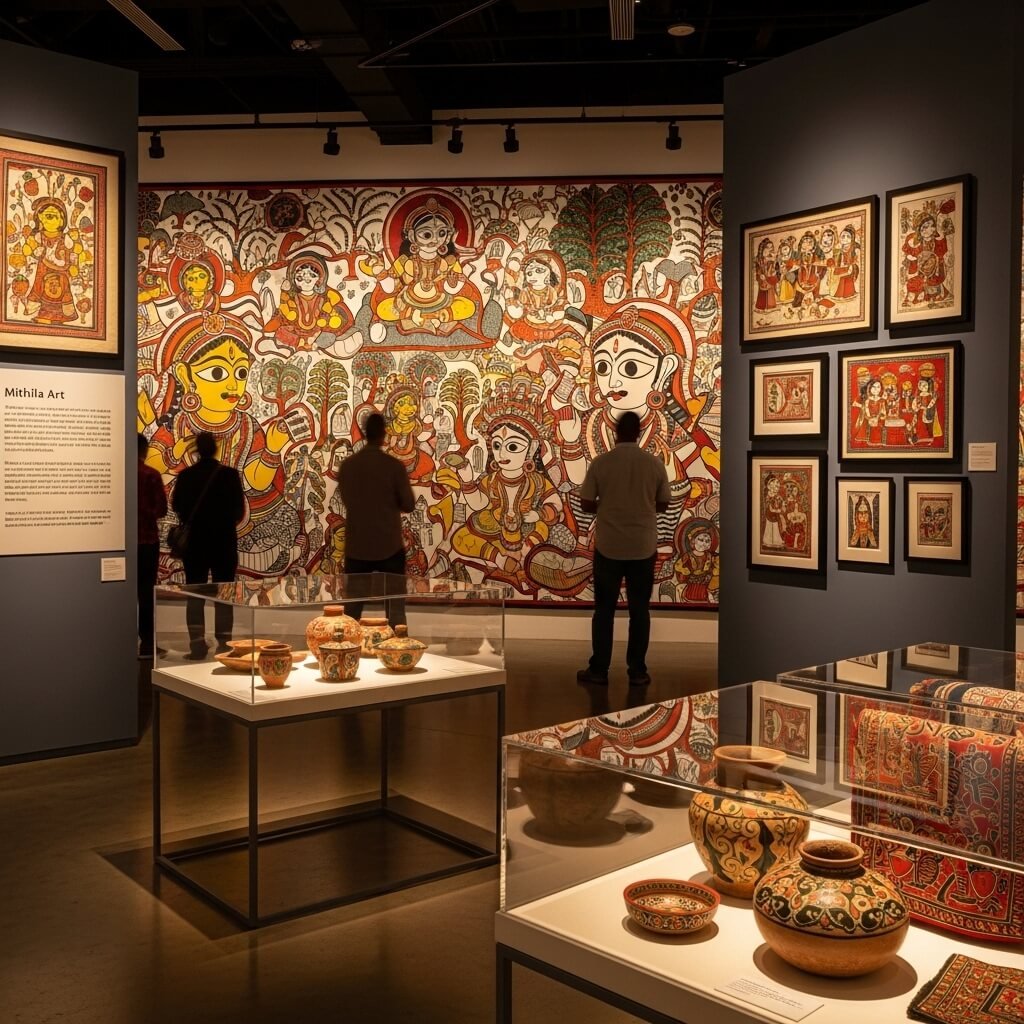
One of its defining traditions is intergenerational learning. Smarthistory notes that Mithila painting was historically passed through generations, especially from mother to daughter.
That structure matters because it means the art form developed not only through formal instruction but through family, observation, repetition, and lived participation in cultural life.
Family
Artistic knowledge held and shared within the family unit.
Observation
Learning through watching — not only formal instruction.
Repetition
Motifs and forms refined through continuous practice over time.
Lived Participation
Art inseparable from the ceremonies and rhythms of daily life.
Second Tradition
Auspicious &
Ceremonial Life
Mithila paintings were historically made to mark important moments and invite sacred blessing — communicating protection, celebration, continuity, and cosmic order.
Another core tradition is its connection to auspicious and ceremonial life. Marriage imagery, fertility symbolism, divine figures, flora, fauna, serpents, flowers, and geometric motifs have all played important roles in communicating protection, celebration, continuity, and cosmic order.
Ceremonial Motifs
Third Tradition
Visual Density &
Intentionality
There is also a strong tradition of visual density and intentionality. Mithila paintings are often notable for filled surfaces, patterned spaces, and carefully structured symbolic forms.
The effect is not incidental decoration; it is a deliberate way of organizing meaning. Even when styles vary across artists and communities, the tradition holds onto a distinctive sense of rhythm, repetition, and narrative concentration.
Every part of the surface contributes — space is structured, not empty.
Geometric patterns and rhythmic repetition create visual coherence.
Multiple stories and symbols coexist within a single composition.
Fourth Tradition
Adaptation
& Resilience
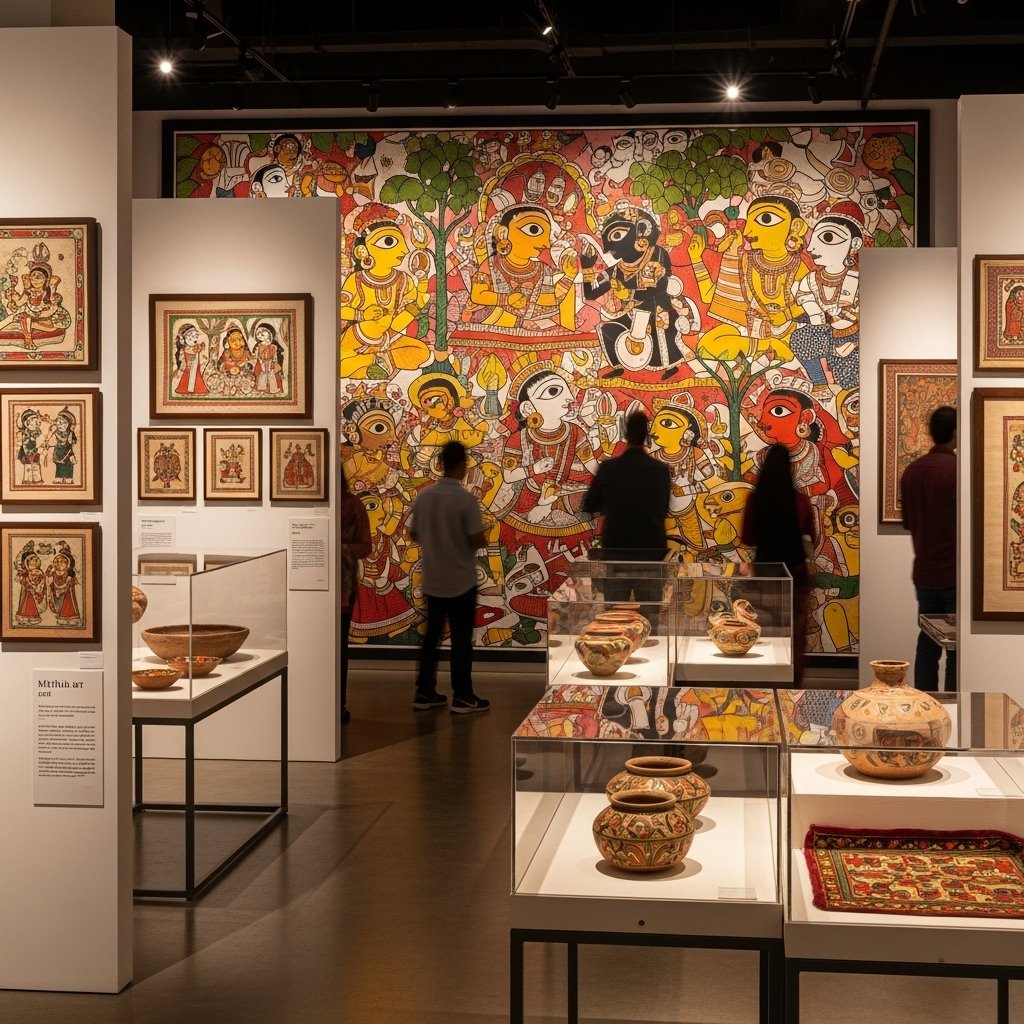
A contemporary museum initiative should also recognize the tradition of adaptation. Mithila painting has shown remarkable resilience by moving across surface, context, and audience without losing its visual identity.
That ability to evolve is itself part of the tradition. It is one reason the museum initiative is future-facing: preserving Mithila means preserving not only what it has been, but its capacity to remain relevant and generative.
Surface
From mud walls to paper, canvas, and gallery spaces.
Context
From domestic ritual to public collections and exhibitions.
Audience
From local families to global viewers, scholars, and diaspora.
Identity
Through all change — the visual identity remains unmistakably Mithila.